

How to Plan a Kitchen Renovation That Stays on Budget
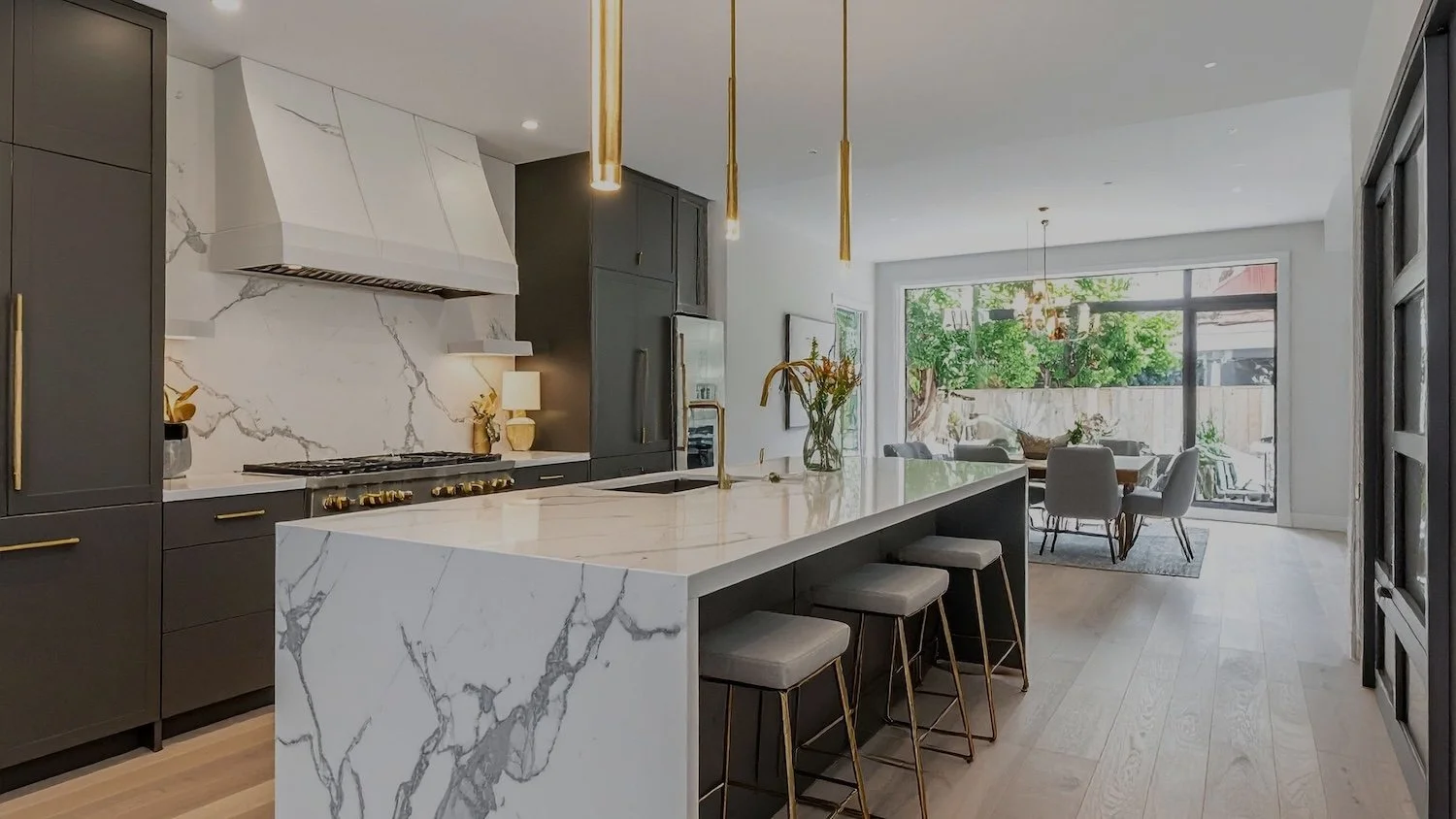
Most homeowners think their kitchen renovation starts the day cabinets are ripped out. It doesn't. By the time demolition begins, the success of your project has already been determined. The real transformation happens weeks earlier, in the planning phase most people skip or rush through.
At Urban RenoProjects, we've renovated kitchens across Whitby, Ajax, Pickering, and Oshawa. High-quality kitchen remodels don't happen by accident. They're engineered.
Below is our complete pre-construction planning process, the same framework we use for every design-build kitchen remodel, whether it's a small kitchen remodel or a complete transformation.
Why Kitchen Remodel Planning Matters More Than You Think
Here's what happens when planning gets rushed:
Appliances don't fit between cabinets (yes, really)
Islands feel cramped or block traffic flow
Storage ends up in all the wrong places
Electrical outlets are poorly positioned
Budget balloons mid-project due to "unexpected" changes
Most of these problems are design failures, not construction failures. They happen because layout, engineering, and material coordination weren't resolved before work began.
Our process eliminates that chaos. Here's how.
Step 1: We Identify What Isn't Working
Every successful kitchen remodel starts with friction analysis, not Pinterest boards.
We walk through your existing kitchen and identify specific pain points:
Is your prep space too tight?
Does the island block movement between fridge and stove?
Is pantry storage inefficient or non-existent?
Are sightlines into the living room cluttered?
Does the layout support how you actually cook and entertain?
Many Durham homes built in the 90s and early 2000s have kitchens designed for a different era, closed-off rooms, minimal storage, and no consideration for open-concept living.
Today's homeowners need:
Better traffic flow between zones
Integrated storage solutions
Multi-functional islands
Intentional lighting layered for tasks and ambiance
Before any layout is drafted, we document how your space is currently being used and where it falls short. This diagnostic phase prevents costly mid-project pivots.
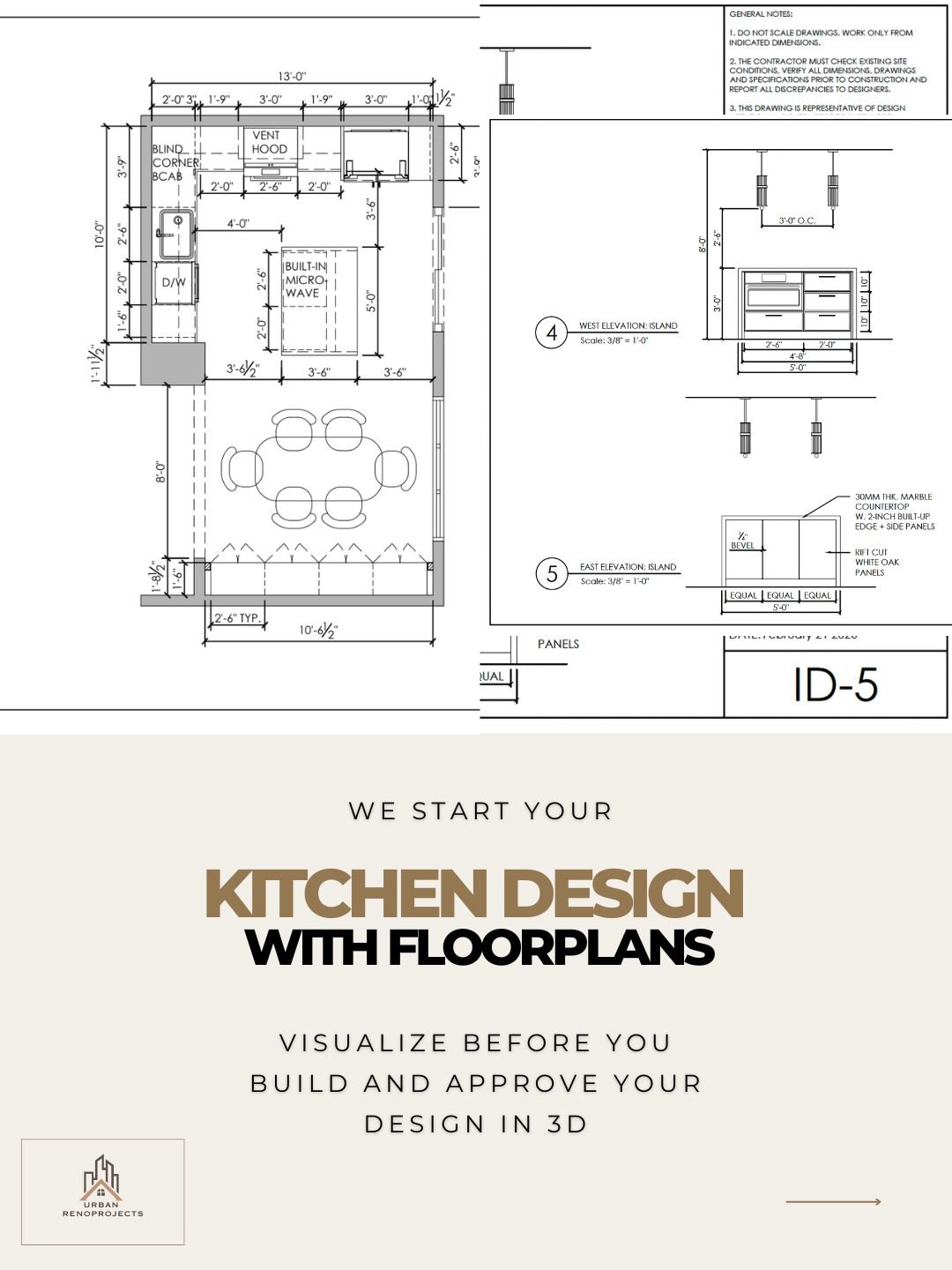
Step 2: We Develop Measured Floorplans & Space Planning
Once we understand the problems, we map out the solution.
Every kitchen renovation begins with precise measured drawings and updated floor plans. This isn't about aesthetics yet, it's pure function and geometry.
What We Analyze:
✓ Precise site measurements (walls, windows, doors, ceiling heights)
✓ Circulation paths and traffic flow between work zones
✓ Appliance placement and door swing clearances
✓ Island proportions and seating capacity
✓ Sightlines into adjacent rooms (if walls are being removed)
✓ Pantry and storage integration
If walls are being removed, we assess how the kitchen connects to dining and living spaces. If an island is being added, we calculate proper clearance distances (42"–48" for walkways, 36" minimum for seated areas).
The goal isn't just a bigger kitchen. It's a better-functioning kitchen.
Step 3: We Handle Structural Engineering & Permit Coordination
Opening walls. Relocating plumbing. Adding windows. Adjusting load-bearing beams. These decisions impact structure, safety, and legal compliance.
When your renovation involves structural changes, electrical upgrades, or mechanical modifications, permits are required. Many homeowners underestimate this stage or assume it's handled automatically. It's not.
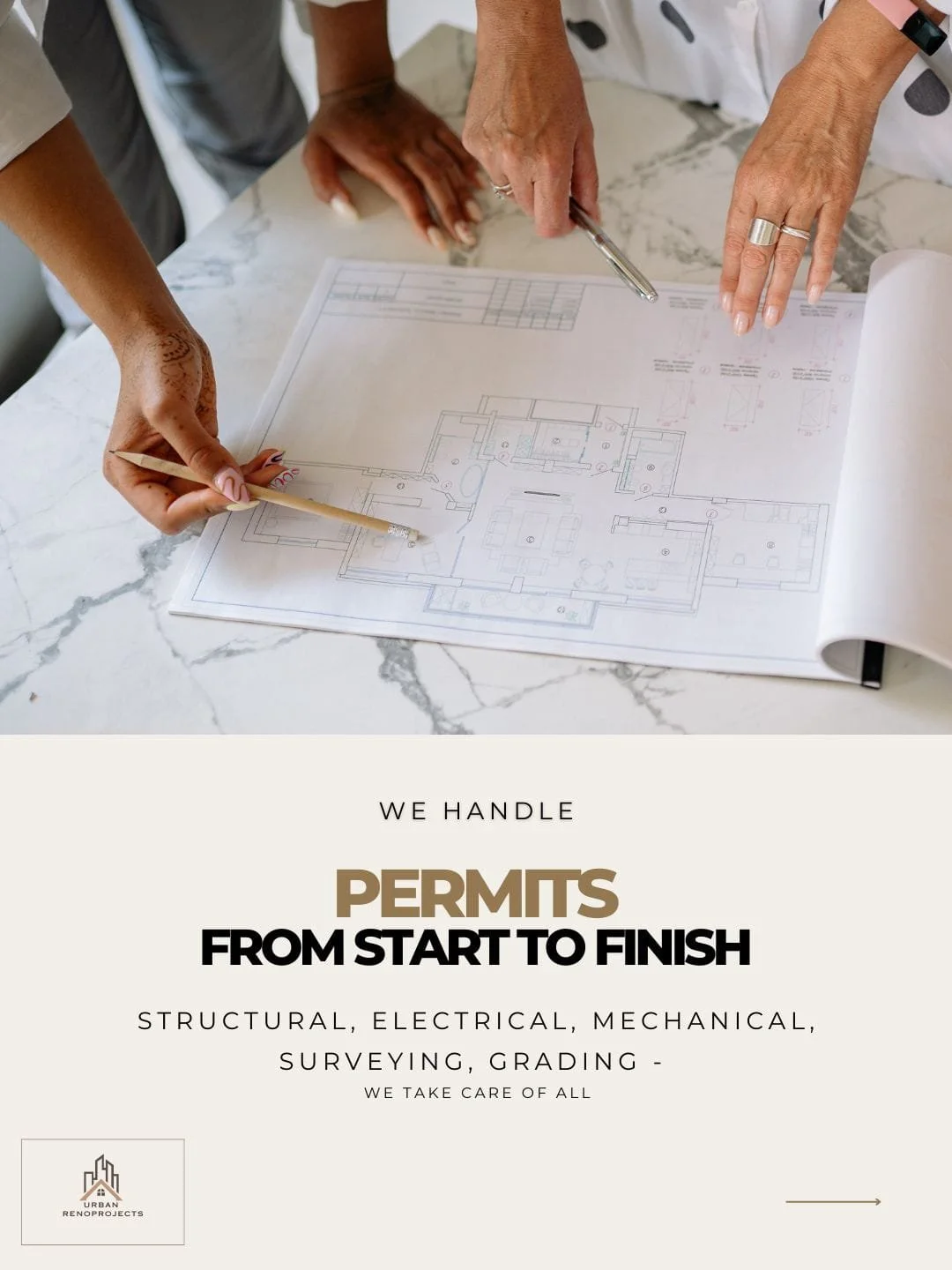
We Manage the Entire Permitting Process:
Structural engineering drawings for load-bearing wall removal
Electrical load calculations and panel upgrades
HVAC relocation plans
Plumbing reconfiguration approvals
Building permits and inspections
Survey requirements (if exterior openings change)
We coordinate directly with engineers and submit all required documentation to municipalities across Durham Region and the GTA.
A properly permitted kitchen renovation protects your investment and ensures the work is done right the first time.
Step 4: We Create Detailed Construction Documents
Beautiful 3D renders help you visualize. But construction runs on documentation. Before a single trade steps on site, we produce complete construction drawings that eliminate ambiguity and prevent costly mid-project confusion.
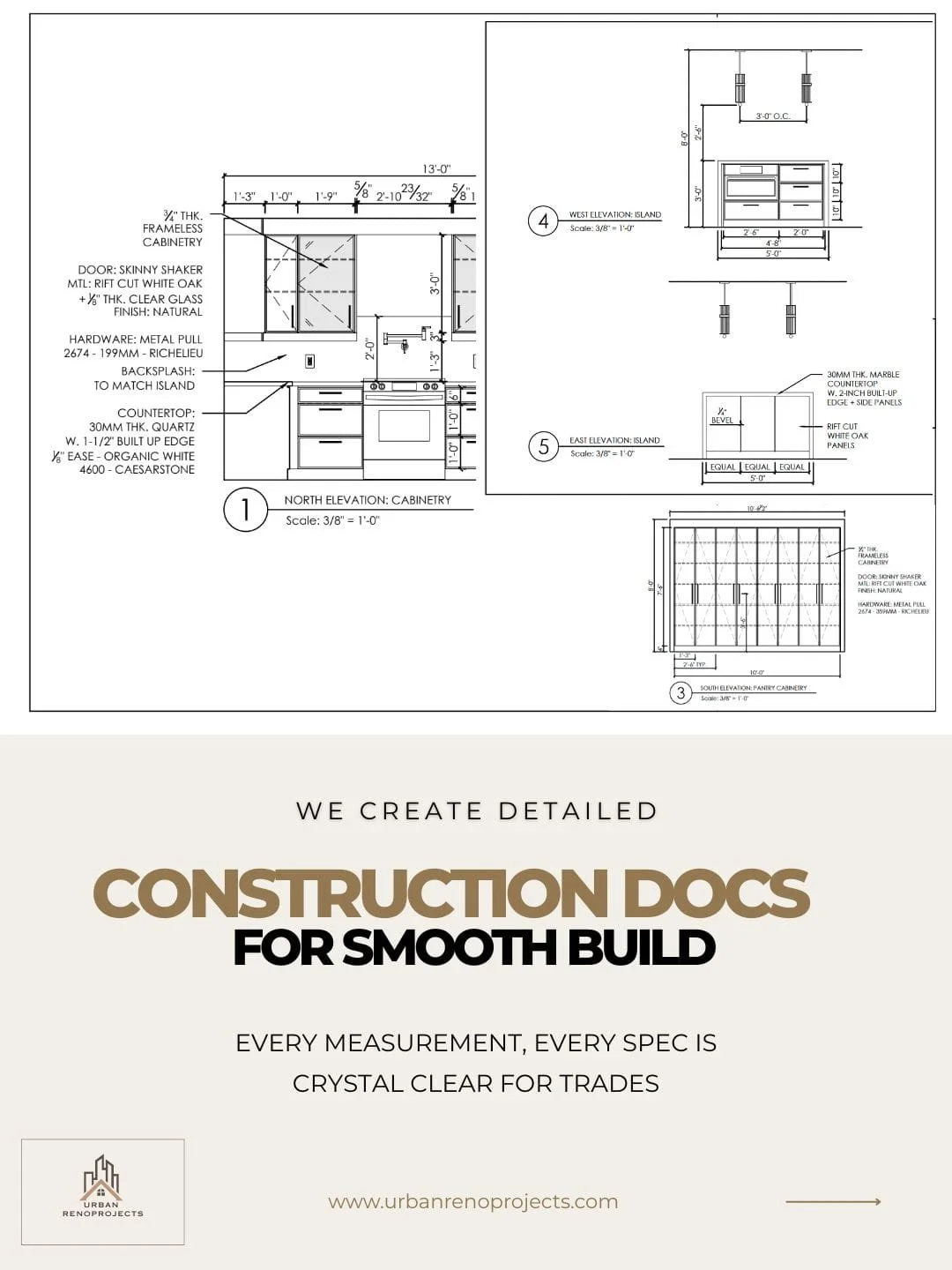
Our Construction Documents Include:
Finalized floor plans with dimensions
Cabinet elevations and millwork details
Appliance specifications and rough-in requirements
Electrical layouts (outlets, switches, lighting circuits)
Plumbing diagrams (sink, dishwasher, pot filler, gas lines)
Finish schedules and material callouts
Hardware and fixture specifications
This is one of the biggest differences between a basic renovation and a professional design-build project.
When documentation is clear:
Trades aren't guessing where fixtures go
Cabinet installers work from exact measurements
Electricians and plumbers coordinate without rework
Projects move faster with fewer delays
Change orders decrease dramatically
It also creates accountability, our team works from the same set of approved drawings.
Step 5: We Create Photorealistic 3D Renders
While construction documents guide the build, 3D renders help you visualize the finished result before a single dollar is spent on materials. Many homeowners struggle to interpret 2D floor plans. Renderings bridge that gap and eliminate uncertainty.
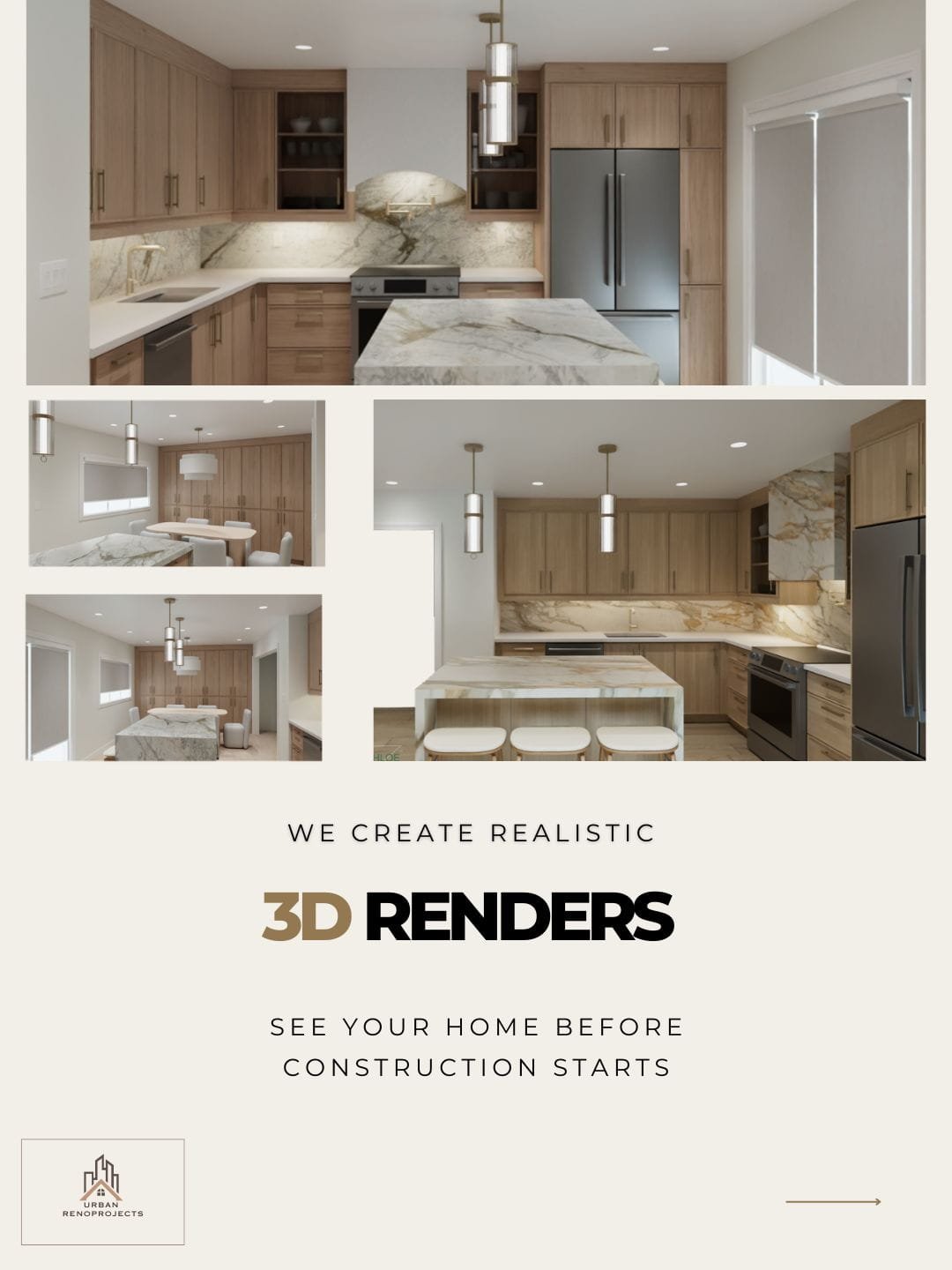
Our Realistic 3D Visuals Let You:
✓ See cabinet proportions and scale relative to the room
✓ Evaluate island size and seating arrangements
✓ Compare finish combinations (countertop + backsplash + cabinetry)
✓ Review lighting placement and ambiance
✓ Understand ceiling heights, crown molding, and trim details
This is where design adjustments happen safely, before materials are ordered.
Want to extend cabinetry to the ceiling? Unsure about waterfall countertop edges? Questioning hardware finish contrast?
We resolve those decisions in 3D. You move into construction knowing exactly what your space will look like. This stage also protects your budget. Late design changes during construction are expensive and disruptive. Render approvals minimize that risk.
Step 6: We Handle Full Material Sourcing, Styling & Take-Offs
Design without sourcing is incomplete. Once layout and visuals are finalized, we move into material coordination and quantity take-offs, ensuring every finish is selected, specified, and ordered before construction begins.

What We Coordinate:
Custom cabinetry specifications
Countertop material and edge profiles
Tile selection (backsplash, flooring)
Flooring options
Hardware finishes (pulls, knobs, hinges)
Plumbing fixtures (faucets, sinks, pot fillers)
Lighting procurement (pendants, under-cabinet, pot lights)
Appliance confirmations and delivery timing
We prepare detailed material lists with exact quantities so orders are accurate. You review and approve everything with our in-house designer before demolition starts.
By resolving finishes in advance, we maintain construction momentum and prevent supply-chain delays.
A high-end kitchen remodel isn't just about premium materials, it's about how materials relate to each other. Tone, texture, scale, proportion: everything must feel intentional.
Kitchen Renovation Timeline: What to Expect
Planning Phase:
Initial consultation & assessment (Week 1)
Floorplan development (Weeks 2–4)
Permits & engineering (Weeks 3–8)
3D rendering & approvals (Weeks 5–7)
Material sourcing & ordering (Weeks 8–10)
Construction Phase:
Demolition & structural work (Weeks 1–2)
Rough-in electrical, plumbing, HVAC (Weeks 3–5)
Drywall, flooring, millwork (Weeks 6–10)
Cabinet installation & countertops (Weeks 11–13)
Finishing touches & inspections (Weeks 14–16)
Total timeline: 4–5 months from concept to completion
Custom millwork, engineering, and permits can extend planning. We provide detailed schedules during consultation.
Kitchen Renovation Cost Factors
Layout Changes
Wall removal & engineering: $5K–$15K+
Plumbing relocation: $2K–$8K
Electrical panel upgrades: $2K–$5K
Cabinetry
Stock cabinets: $8K–$15K
Semi-custom: $15K–$35K
Full custom millwork: $35K–$70K+
Countertops
Quartz: $80–$150/sq ft installed
Granite: $60–$120/sq ft installed
Porcelain slabs: $100–$180/sq ft installed
Flooring & Lighting
Engineered hardwood: $12–$18/sq ft
Tile: $15–$25/sq ft
Lighting package: $3K–$20K
Most full-scale kitchen renovations ranges between $60K–$150K+ depending on size, finishes, and structural complexity.
Final costs reflect your specific scope and selections.
Common Kitchen Renovation Mistakes
Skipping structural engineering → We coordinate with licensed engineers for every wall removal
Ordering materials too early → We finalize measurements before placing orders
Ignoring permits → We manage all permits and inspections
Choosing finishes in isolation → Our 3D renders show exact combinations
Poor lighting design → We layer task, ambient, and accent lighting
Ready to Plan Your Renovation?
The design phase isn't an add-on. It's the foundation of your result. We manage kitchen renovations from concept through completion. The most important decision you'll make is how your project is planned.

Frequently Asked Questions
-
Typically 5–7 weeks depending on permit requirements, engineering complexity, and material lead times.
-
If you're removing walls, relocating plumbing, upgrading electrical panels, or making structural changes, yes. We handle all permit applications and inspections.
-
Stock cabinets come in standard sizes with limited finishes. Custom millwork is built to exact specifications for your space with unlimited design options.
-
Yes, as long as they're in good condition and fit the new layout. We'll incorporate them into the design and ensure proper clearances.
-
Most full-scale custom kitchen renovations range from $60K–$150K+ depending on size, finishes, and structural complexity. We provide detailed estimates after the initial consultation.
-
Our planning process minimizes this need, but if changes arise, we assess impact on timeline and budget before proceeding. Change orders are documented and approved in writing.
Written by: Editorial Team @ Urban RenoProjects.
Licensed & Insured Renovation Contractor serving Durham Region, Whitby, and the GTA. WSIB Certified. Ontario Building Code compliant.





Use this AI blueprint to level up your contractor conversation for your renovation.